

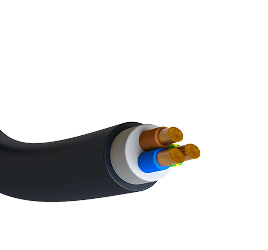
Pulling a cable looks simple until you are dragging a heavy multicore cable through a congested riser, around bends and across long duct runs. Done badly, the cable insulation can be stretched, scuffed or crushed, and the damage may not show up until months later.
Our crews plan every pull before it starts. We check the route, cable weight, bending radius and pulling tension, so the cable goes in safely and comes out undamaged.
Commercial buildings, hospitals, hotels, schools, warehouses, factories, data rooms, residential towers and infrastructure projects.
How do you avoid damaging cables during pulling? We respect the manufacturer's maximum pulling tension and minimum bending radius, use rollers to reduce friction, and assign spotters at every bend.
Do you provide the cables too? We can supply or install client-supplied material, depending on your contract.
Can you pull cables in occupied buildings? Yes. We plan work hours, protect finishes and keep noise and disruption low.
A cable is only as reliable as its ends. Loose lugs, poorly crimped connections or badly fitted glands cause overheating, nuisance tripping and in the worst cases fires.
Our technicians terminate cables the right way: correct gland, correct lug, correct torque, clear labelling.
Most electrical faults start at a connection point. Doing terminations properly means lower heat, fewer faults and safer systems.
Do you terminate both copper and aluminium cables? Yes, using the correct lugs and, where needed, anti-oxidant compound.
Can you work on existing panels? Yes, subject to safe isolation and permit procedures.
Do you label every cable? Always. Clear labelling saves hours for whoever maintains the system later.
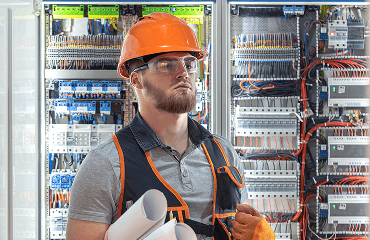
Panels are the heart of any electrical system. Whether it is a main distribution board in the ground-floor switch room or a small lighting DB on a corridor wall, each one needs to be positioned accurately, anchored firmly and connected safely.
Poorly installed panels can lead to overheating, vibration-related loosening and maintenance headaches. Good installation protects both equipment and people.
Do you install panels supplied by others? Yes. We install panels from any approved manufacturer.
Can you handle heavy switchgear? Yes, with appropriate lifting gear, rollers and trained crews.
Do you provide circuit directories? Yes. Every panel gets legible, durable labelling and updated schedules.
Good containment makes everything else easier: cable pulling, inspection, upgrades and repairs. Poor containment makes all of them harder.
We install cable tray, ladder and trunking systems that are strong, straight and built to carry the load designed for them.
Containment that is undersized or poorly supported can sag, corrode or fail. A well-built system protects your cables and keeps your building organised for decades.
How do I choose between tray and ladder? Ladder is usually better for heavy power cables and long spans. Perforated tray suits lighter loads and control or data cables. Our team can advise based on your drawings.
Can you install containment in tight ceiling spaces? Yes. We coordinate with other trades and plan routes ahead of time.
Do you handle outdoor installations? Yes, using suitable corrosion-resistant materials.
Installation is not finished when the last cable is pulled. It is finished when the system has been tested, proven safe and handed over with documentation.
Our testing and commissioning team verifies that every circuit performs as designed and meets the required safety standards before it is energised and used.
Testing finds problems while they are cheap to fix. Skipping it moves the risk to your building's occupants and your maintenance budget.
Will I get written test reports? Yes. Every test result is recorded and handed over in an organised file.
Can you test systems installed by another contractor? Yes, and we will report clearly on any defects found.
Do you work with consultants and authority inspectors? Yes. We coordinate inspections and witness tests.
A fire alarm system has one job: to work when everything else is going wrong. That starts with the cabling. If the wiring fails before the alarm can do its job, the system is useless.
We lay fire alarm cables with careful attention to cable type, routing, protection and identification, so the system keeps communicating when it matters most.
Our work follows the project specification, the manufacturer's installation requirements, relevant national and international fire alarm standards and local civil defence or authority regulations. (Add the specific codes you comply with.)
Do you supply and program the fire alarm panel? We focus on cabling and installation, and coordinate with the panel supplier for programming and commissioning. Tell us your requirements and we will confirm scope.
Can you work during building fit-out? Yes. We coordinate with other trades to avoid damage and rework.
Do you provide test records? Yes. Every circuit is tested and documented.
Emergency systems are the ones you hope you never need, and cannot afford to have fail. Emergency lighting, exit signs, evacuation systems and other life-safety circuits depend on dependable cable routes and solid installation.
We install emergency cabling with the same care we would want in a building where our own families are.
Are emergency cables different from normal cables? Often yes. Depending on the project, they may need to be fire-resistant and run in protected routes. We follow the approved design and specifications.
Can you test emergency lighting after installation? Yes, in coordination with the system supplier, including functional and duration testing.
Do you handle retrofit projects? Yes. We can upgrade or extend emergency circuits in existing buildings.
Need a dependable emergency circuit installer? Request a Quote
Discuss this requirementA Building Management System brings your HVAC, lighting, pumps, meters and other services under one roof, giving you control, visibility and lower energy bills. But a BMS is only as good as its wiring and field devices.
Do you program the BMS software? We focus on installation, wiring and field-side commissioning. We work alongside your BMS vendor or system integrator for programming. Let us know your setup and we will confirm scope.
Can you add points to an existing BMS? Yes, subject to compatibility with your existing system.
What documents do I receive? Point lists, wiring diagrams, test sheets and as-built drawings.
Your network is only as dependable as the cabling behind it. Messy, poorly terminated or untested cabling is a leading cause of slow speeds, dropped connections and hard-to-trace faults.
We install structured cabling systems that are organised, labelled and tested, ready to support your business today and scale for tomorrow.
A good structured cabling system supports faster networks, simpler troubleshooting and easier moves, adds and changes. It is infrastructure that can serve a building for many years.
Copper or fibre? Copper suits most desk-to-switch connections. Fibre is better for long distances, backbones and high-bandwidth needs. We can advise on the right mix.
Do you provide test certificates? Yes. Test results for every link are provided.
Can you install cabling in a working office? Yes. We plan around your operating hours to reduce disruption.
 CONTACT US

No more blackouts, no more energy worries! CALDERSTONE ensures you have uninterrupted, high-quality power whenever you need it. Get a free!

Calderstone delivers safe, tested and well-documented LV and ELV electrical installations.